


Senate Rejects Fifth Attempt to End Government Shutdown Amidst Healthcare Negotiations
In a significant political standoff, a majority of Democratic senators on Monday turned down a fifth attempt by Republicans to pass a stopgap funding bill aimed at ending the ongoing government shutdown. This decision came just hours after former President Donald Trump hinted at the possibility of a healthcare deal with Democrats, adding another layer of complexity to the already tense negotiations.
The Vote and Its Implications
The Senate voted 52-42 against the Trump-backed continuing resolution, which sought to maintain government funding at pre-shutdown levels until November 21. The measure fell short of the 60 votes required to overcome a legislative filibuster, ensuring that the government will remain unfunded for a seventh consecutive day as of Tuesday.
Democratic Senators Catherine Cortez Masto of Nevada, John Fetterman of Pennsylvania, and Angus King of Maine-an Independent who aligns with the Democrats-were the only members of their party to support the bill. On the Republican side, Senator Rand Paul of Kentucky stood alone in opposition. Notably, several senators from both parties abstained from voting, reflecting the deep divisions that have characterized this legislative session.
Background of the Shutdown
The current government shutdown began on October 1, following Senate Democrats’ rejection of a short-term funding bill. This lapse in federal funding has significant implications for various government services and programs, affecting everything from national parks to food assistance programs. The political landscape surrounding the shutdown is reminiscent of previous standoffs, such as the 2013 government shutdown, which lasted 16 days and was primarily over funding for the Affordable Care Act (ACA).
Democratic Concerns Over Healthcare
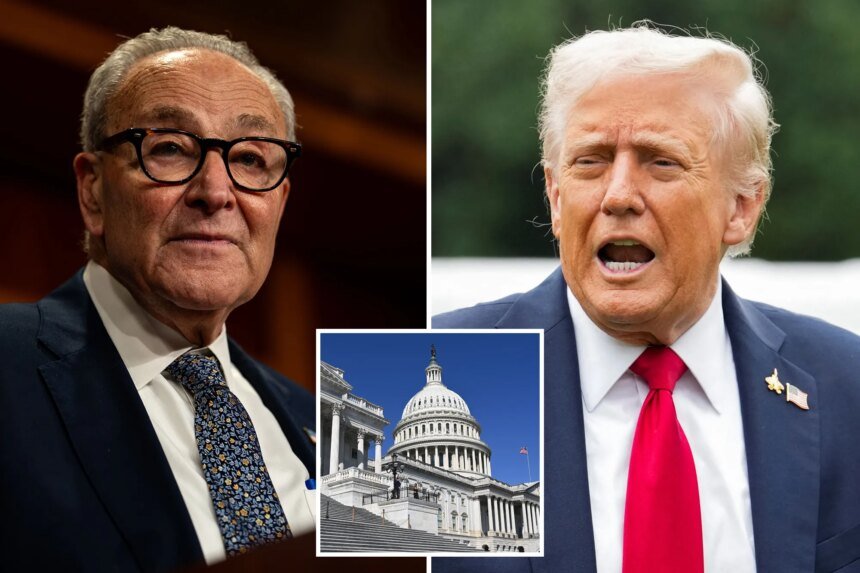
Senate Minority Leader Chuck Schumer (D-NY) and other Democrats have expressed strong objections to the proposed “clean” continuing resolution, primarily because it does not extend the Affordable Care Act subsidies that are set to expire at the end of this year. These subsidies are crucial for millions of Americans who rely on them for affordable healthcare coverage.
In a press conference prior to the vote, Schumer emphasized the need for a comprehensive approach to healthcare, stating, “For months, Democrats have been demanding Trump and Republicans come to the table and work with us to deliver lower costs and better healthcare for the American people.” This sentiment underscores the broader Democratic strategy of linking government funding to healthcare reforms, a tactic that has historical precedence in U.S. politics.
Trump’s Healthcare Negotiations
In a surprising turn, Trump indicated a willingness to negotiate on healthcare issues, stating, “If we made the right deal, I’d make a deal. Sure.” He criticized the ACA, claiming that the subsidies are a significant financial burden, and suggested that better healthcare solutions could be achieved through bipartisan negotiations. However, Schumer quickly refuted Trump’s claims, asserting that no such negotiations were currently taking place.
Trump later reiterated his position on social media, urging Democrats to reopen the government immediately while expressing his readiness to collaborate on healthcare policies. This call for cooperation, however, appears to be more of a political maneuver than a genuine offer, as the underlying issues remain contentious.
The Public’s Perspective
Public opinion on the shutdown and the associated healthcare negotiations is mixed. A recent Harvard CAPS/Harris poll revealed that 65% of Americans, including nearly 40% of Democrats, believe that Democrats should accept a continuing resolution at current spending levels, even without the extension of ACA subsidies. Only 35% of respondents felt that Democrats should hold out for additional funding, indicating a potential disconnect between party leadership and constituents.
Republican Arguments
Republican leaders have been vocal in their criticism of the Democrats, arguing that they are responsible for the shutdown. Senate Majority Leader John Thune (R-SD) stated, “Democrats own this. They own any lapse in funding for critical food aid programs, just as they own every other negative effect of this shutdown.” This rhetoric aims to shift the blame onto Democrats, framing the issue as one of political responsibility rather than policy disagreement.
Republicans have also raised concerns about the financial implications of complying with Democratic demands, suggesting that reversing changes to Medicaid payment and eligibility rules could cost taxpayers up to $1.5 trillion over the next decade. They argue that these issues should be addressed after the government is funded, emphasizing the need for a clean funding bill to avoid further complications.
Conclusion
As the government shutdown continues, the political landscape remains fraught with tension and uncertainty. The rejection of the latest funding bill highlights the deep divisions within Congress and the challenges of bipartisan cooperation. With healthcare negotiations hanging in the balance, both parties must navigate a complex web of public opinion, fiscal responsibility, and political strategy. The coming days will be crucial in determining whether a resolution can be reached, or if the standoff will persist, further impacting millions of Americans who rely on government services and healthcare programs.